

time is a window
ripple the glass

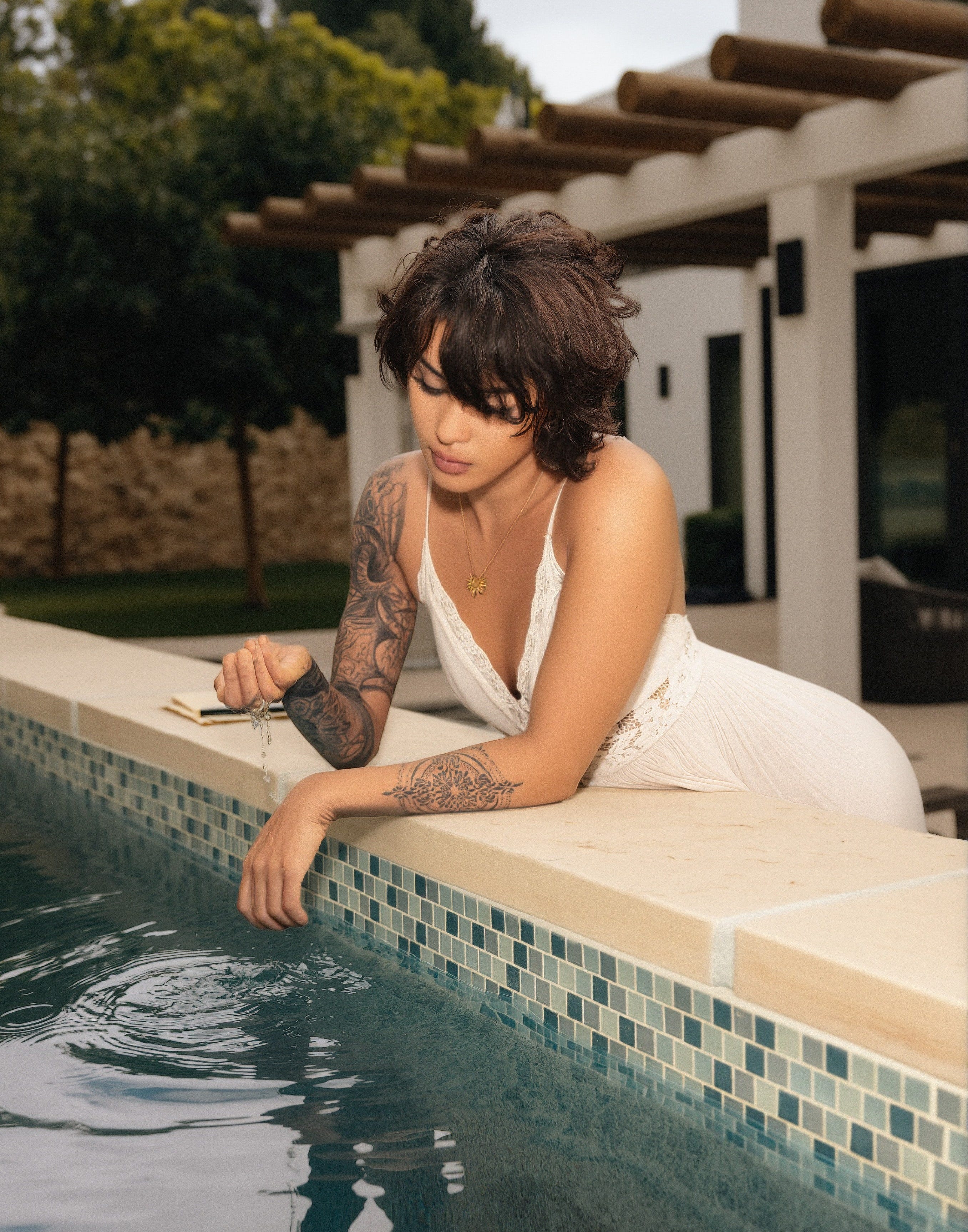
The water was still that afternoon, until my fingers broke the surface.
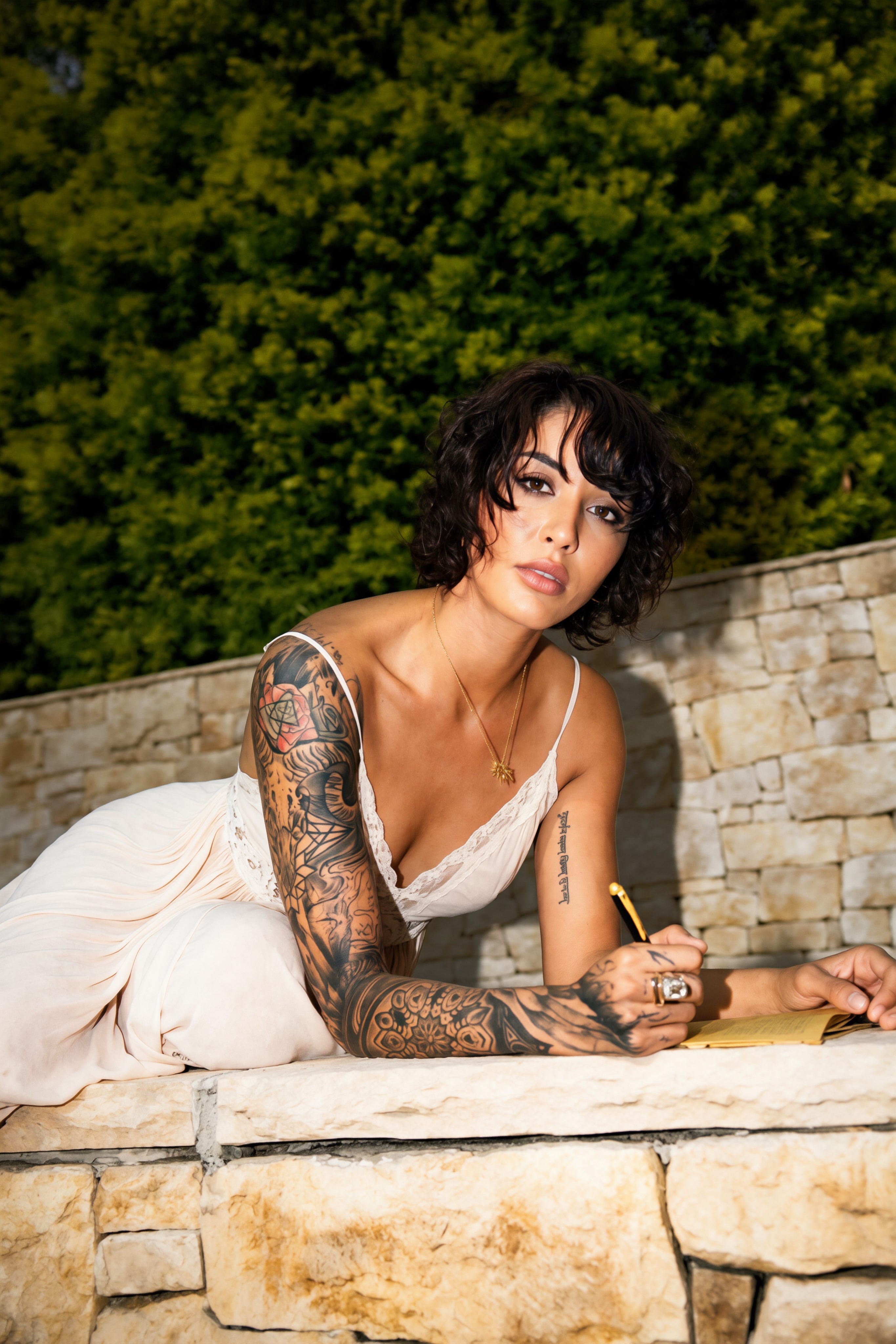
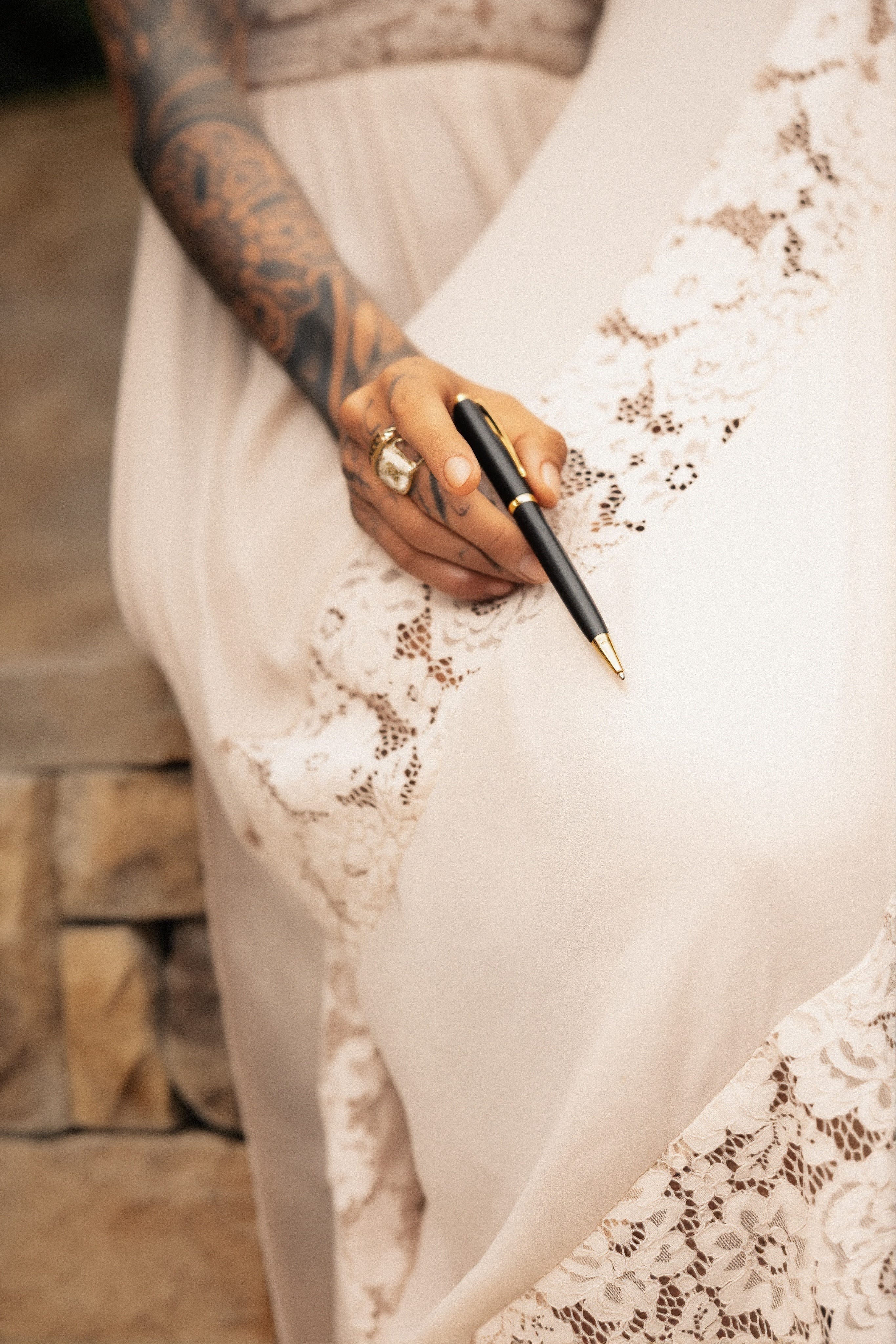
I crouched there on the warm stone edge, linen slipping off one shoulder, sun licking the tattoos that map my skin like old scriptures rewritten in flesh. I forget I have tattoos until someone asks me about them. Then I remember the spells encrypted in their ink and the experiences embedded into my body as deeply as the shapes they take.
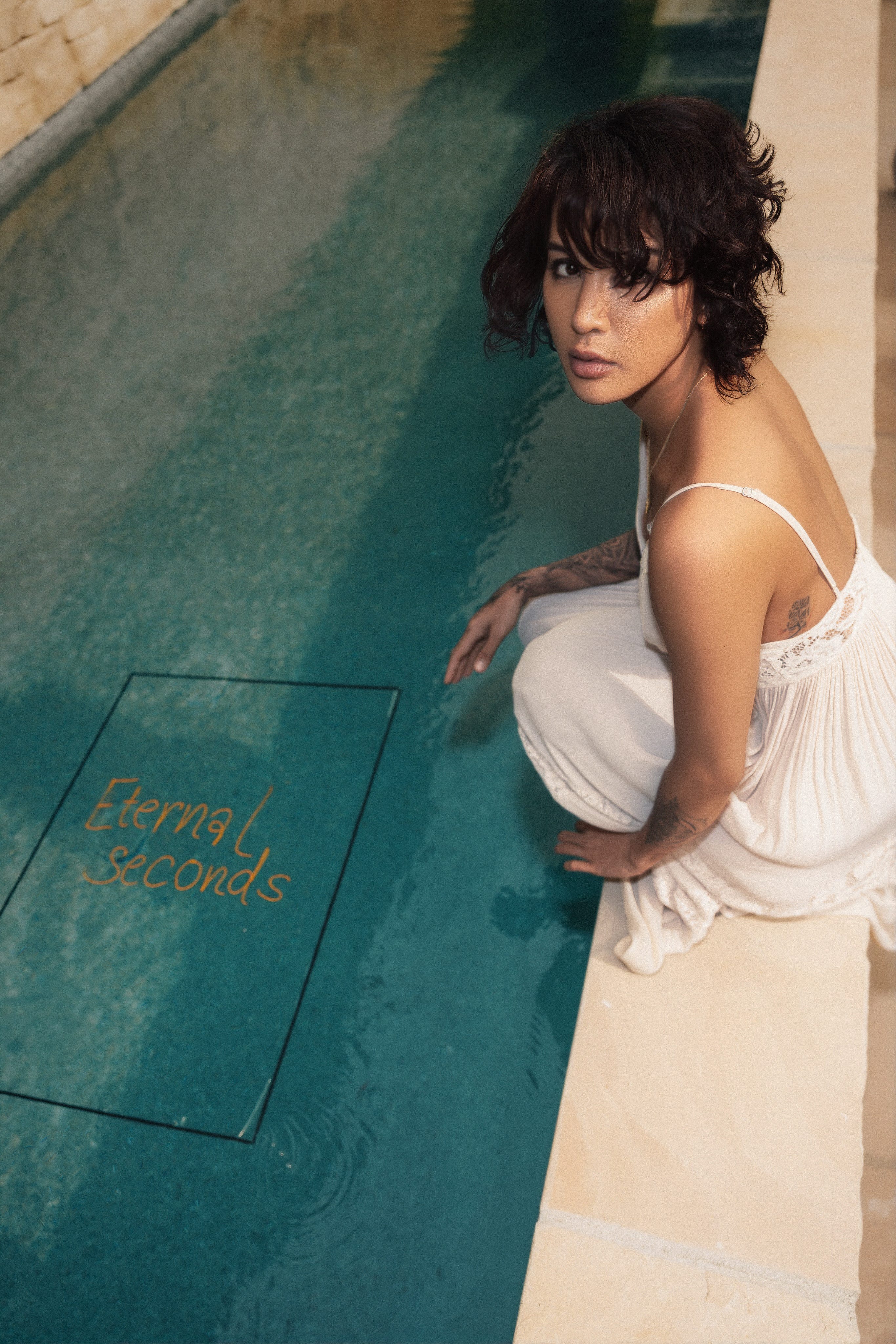
Below me, a glass pane hovered just beneath the ripples. And on it, in golden script that caught the light like a secret finally spoken:
Eternal seconds.
Not minutes. Not hours. Seconds. Those fleeting, trembling things we usually let slip through our hands like water. But here they were—held, suspended, made visible. A window into time itself.
I stared at my reflection fractured across the pool’s moving skin and felt something unnameable stir. In that moment, I didn’t recognize myself — this woman gazing back at me felt both intimately familiar and strangely foreign, her face and presence reshaped by the carbon monoxide poisoning and concussion that fractured my memory and rewired how I perceive the very thing we were conceptualizing in the shoot.
Time.
I teared a little but the photographer didn’t see. My surface composition did not match my internal landscape. The feelings were wetter than the water. The same flood that arrives when I’m deep in ritual, or when a poem strikes its way through my throat at 3am, or when a circle of women storm into the raw throb of what it means to be unapologetically full-spectrum in these wild times. Those feelings.
Time is a window.
It used to feel like a prison. Or a straight line marching me towards unimaginative decay. But I have learned that time, as a metric, can be a support rather than a handicap. An enhancer of whatever we choose to exist. A window. Something we can lean through. Something we can open.
Something that lets the eternal breathe into the now.
I’ve spent years unlearning the rigid clocks and musts of the old stories and the old world—the constructs and schedules that once dictated my body, my creativity, my worth. That path collapsed beautifully, messily, under the weight of its own control. What emerged was this: a life lived in eternal seconds. Moments so full they stretch into forever.
Before the accident, I had quietly asked the Universe to help me step into my full evolved self — the version of me stripped of performance, egoic masks, and everything that no longer belonged. I didn’t know the prayer to know myself would be answered through forgetting. The carbon monoxide poisoning was an unspecified initiation. It stripped away what I was attached to: old identities, linear stories, the illusion of a continuous “me” built on accumulated memories.
Memory loss is sacred, ruthless work — it peeled back the layers I clung to; narratives I mistook as a sense of self. It has left me so raw in essence I ache. From someone who has moved through the repercussions of this, a complete identity shift into who I truly am—without the avatars or egoic drive—is not only likely, it was —and is — inevitable.
Scientifically as well as philosophically: CO poisoning starves the brain of oxygen, particularly damaging the hippocampus—the very region responsible for forming new memories and binding our sense of time and self. What was lost were not just fragments of the past, but the smooth machinery of linear recall. In its place came gaps, fog, and a strange liberation. Art became my bridge across these fractured landscapes—a way of sharing the ineffable, not because I couldn’t speak it, but because the old pathways of memory had dissolved. I needed an anchor. A kite. A way to fly while feeling grounded again. Art has been that for me.
Art has reminded me that life is not passive retrieval but active creation. The brain’s neuroplasticity, its miraculous ability to forge new neural pathways, became my ally through art. What science calls synaptic rewiring, I experienced as the soul’s refusal to be bound by broken clocks. Time, once a rigid metric, revealed itself as fluid, malleable, and deeply relational—something we don’t just move through, but something we can reshape from within.
The present as portal. The feminine as the one who refuses to be rushed or slowed or deterred from the inevitable embrace of her own becoming.
We are told time is running out.
But we don’t ask where the voice is coming from or how it reached our ear.
Yes, the world is burning — but so is our spirit.
The clock is ticking on everything from our bodies to the planet.
And yes—there is urgency. But urgency without presence becomes violence. The real revolution isn’t in speeding up. It’s in slowing down enough to actually feel what’s moving through us. To let the seconds become eternal by giving them our full, dripping attention.
In my Substack, in the circles, in the ceremonies —I keep returning to this: how do we live inside the eternal second while still answering the call of these times?
We do it by making art that remembers.
By touching skin like it’s scripture.
By laughing so hard the ancestors lean in closer.
By planting a garden and calling it prayer.
By choosing pleasure as purpose.
By claiming joy as rebellion.
Where are your eternal seconds?
In the way your child looks at you when they think you’re not watching?
In the first sip of tea made with the reverence of plants you grew yourself?
In the song that makes you dance alone in your kitchen at midnight?
In the brave, trembling yes you whisper to your own desire?
Find them and free them.
Time is not against us, loves.
It’s waiting for us to ripple through its window and become ourselves.
Xx
Adeléyde 🌹
🫶🏽 loved this reflection and story. Was a pleasure creating together